


Will Heathrow’s Third Runway take off? – A Case Law History

The origins of Heathrow’s name bely its modern-day significance. The place name is derived in part from an old Middle English term that means ‘rough, uncultivated ground’, a far cry from its current status as Europe’s busiest airport and the fourth busiest globally in terms of passenger traffic. Its size, environmental impact, and a seemingly constant stream of proposals for its expansion has resulted in numerous legal challenges relating to air quality, noise, planning, and more recently, climate change.
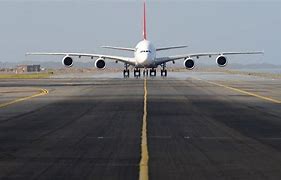
On 29 January 2025, Government support for a third runway was announced in a speech by Chancellor Rachel Reeves, who invited development proposals to be brought forward to the summer by the airport owners. The Government have said the next step would be undertaking an assessment of the plans through the Airport National Policy Statement. She is hoping to see “spades in the ground” by the end of this parliament and planes taking off by 2035. The first Government endorsement of a third Heathrow runway was in December 2003 in an aviation white paper by the then transport secretary, Alistair Darling. It had expected the third runway to be built by 2015.
The Heathrow Case Law
The airport has been at the heart of numerous legal battles over the past few decades on a range of environmental issues.
There was long running series of litigation from 1995 to 2003 attempting to prevent/reduce night flight schedules due to noise pollution. It culminated in a case brought to the European Court of Human Rights, where it determined that there had been a lack of effective remedy for those affected by the noise due to shortcomings in the judicial review process. The Court had not gone so far as to find that the noise breached an Art 8 ‘right to sleep’. However, the case had significant practical impacts given night flights at Heathrow have remained at similar levels to the early 1990s.
There are also several cases involving environmental activists seeking to disrupt activities at the airport to protest the climate impacts of the airport, particularly those that would be caused by new development of a third runway. This has involved the airport seeking injunctive relief against activists potentially seeking to take disruptive action at the airport. A more recent judgment found protestors guilty of conspiracy to cause public nuisance with a plan to close Heathrow by operating drones. Three activists were given suspended sentences as a result.
The case law relating to the third runway alone is illustrative of how long the expansion proposals have been in contention. In 2010, a group of London Councils were unsuccessful in challenging the Secretary of State’s preliminary approval (confirmation of policy support) of a third runway. The judge held that the Court could only engage in a limited review of the approval decision as aspects such as climate change and economic concerns in the government’s air transport policy were not yet finalised. The decision was therefore not quashed.
More recently in 2020, The Supreme Court ruled that the 2018 National Airport Policy Statement, which provided in principle support for Heathrow’s expansion, was lawful, reversing a Court of Appeal decision. In the challenge that had been brought by Friends of the Earth and Plan B, the Court held that the Secretary of State had not unlawfully ignored the Paris Agreement in the Policy Statement and the environmental assessments. The Court also held that the SoS decision not to assess the impacts of non-Co2 emissions and post 2050 climate impacts, given uncertainties about their quantification and that they would be further considered later in the planning process.
Current Concerns about Third Runway and Other Airport Expansion
 Despite government support for Heathrow Expansion, there are some serious obstacles from legal, economic, and climate change perspective. As per the Climate Change Act, the Government is legally mandated to publish a carbon budget every 5 years showing how the UK is going to meet its net zero by 2050 target. The Climate Change Committee have made it clear that there is very limited opportunity for the expansion of air travel in the UK without significant emission cuts in other sectors.
It is unclear where these cuts would come from. Other emission saving measures, such as sustainable aviation fuel mandates, have already been factored into carbon accounting and does not account for further airport expansion. Other technologies such as zero emissions flights are very much in their infancy and are unlikely to amount to a substantial saving in terms of reducing emissions. Other carbon offsetting measures, such as planting trees, would also require a significant amount of land in order to effectively offset the emissions from Heathrow.
Heathrow is only one airport expansion proposed in the UK, with development also planned at Gatwick, Luton, and Stansted. Approval of any of these proposals will affect the others in terms of the justifications relating the need to increase capacity and the benefits of economic growth.
There are also local environmental impacts to consider. A third runway would likely lead to an increase in noise and air pollution, as well as congestion on local roads. Current proposals for expansion include diversion of the M25, and construction of a new tunnel under the runway.
Rachel Reeves has promised that the assessment of the Airport National Policy Statement will ‘ensure that a third runway is delivered in line with our legal, environmental and climate objectives.’ Based on current evidence, it is difficult to see how the third runway can be reconciled with such aims.
