


The debate over ‘low-volume fracking’

This Friday, North Yorkshire Council’s Strategic Planning Committee was due to consider an application for a scheme involving low-volume fracking near the North York Moors National Park, which had been recommended for approval by officers. However, this morning it was announced that the meeting would be postponed until the Planning Inspectorate had considered requests for the application to be called in and determined by the Secretary of State rather than the Council.
The call-in requests, and over 1400 objections to the scheme, highlight the controversial nature of the application. However, while fracking in general is a well-known subject of political debate, ‘low-volume fracking’ may be a less familiar concept. This blog post aims to give an overview of what it involves, its legal status, and how those concerned with such proposals can get involved in the decision-making process.
What is low-volume fracking?
Hydraulic fracturing, or ‘fracking,’ involves injecting fluid into a perforated oil or gas well at high pressure to create cracks in the rock layer. Proppant, such as sand, is mixed with the pumped fluid to hold (or ‘prop’) the fractures open when the pressure is released. This allows oil or gas to flow through the fractures into the wellbore, so that more of it can be extracted.
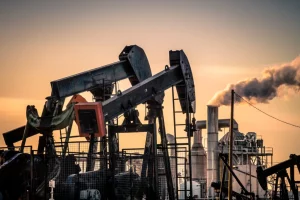
In reality, there is no clear distinction between fracking and ‘low-volume fracking’ (or other terms such as a ‘proppant squeeze’ used by the applicant in North Yorkshire).
All of these techniques involve pumping fluid and proppant into a low-permeability formation which contains hydrocarbons, until the pressure exceeds the ‘fracture propagation pressure’ of the rock (i.e. the point at which the pressure is sufficient to create fractures in the rock). All are done for the purpose of increasing the hydrocarbon output of the well.
Legal status
Fracking has long been controversial in the UK, particularly due to its potential to cause earthquakes, which cannot yet be forecast with certainty. As a result of this safety concern, the Government announced a moratorium on fracking in England in 2019. In October 2025, the Secretary of State for Energy Security and Net Zero announced plans to ban fracking in England permanently, as part of a focus on renewable energy. However, the Government’s refusal to permit fracking relates only to those fracking operations which require hydraulic fracturing consent. Under section 4A and 4B of the Petroleum Act 1998 (introduced by the Infrastructure Act 2015), such consents are only required where fracking ‘involves, or is expected to involve, the injection of (i) more than 1,000 cubic metres of fluid at each stage … or (ii) more than 10,000 cubic metres of fluid in total.’
This means that ‘low-volume fracking’ (i.e. any fracking which does not meet the thresholds in the Petroleum Act) currently falls outside the fracking ban, due to its scale. This was noted by a 2025 parliamentary petition, which challenged what has been seen as a ‘loophole,’ highlighting that the effects of small-scale fracking are poorly understood. On 15 January 2026, the government responded to the petition, stating that it ‘recognises concerns from local communities regarding low volume fracturing and the fact that it is currently treated differently, and is therefore currently reviewing the position with regard to low volume hydraulic fracturing.’
Schemes currently under consideration
Nonetheless, several applications for such ‘low-volume fracking’ developments are currently, or have recently been, under consideration, such as:
- The application mentioned above, for a new gas site involving a proppant squeeze near the North York Moors National Park.
- An application to vary an environmental permit at a site in West Newton, East Yorkshire, to allow ‘reservoir stimulation’ (another term for fracking).
- In September 2024, a proposed scheme for gas drilling and production to include refining and ‘small-scale fracking’ at the Wressle site near Scunthorpe was granted permission, which was later quashed on the basis of the Finch judgment in the Supreme Court. In 2025, a second EIA screening opinion was sought for a new application at the site, and North Lincolnshire Council again determined that an EIA was not necessary.
The decision-making process and environmental considerations
Before low-volume fracking schemes can go ahead, they require a range of consents and permissions:
- Planning permission from the Local Planning Authority, often involving EIA Screening Opinions. The Local Plan may or may not have specific provisions which need to be considered relating to fracking (for instance in North Yorkshire, one key area of dispute relates to whether the development is supported under the local minerals and waste plan, which has a wider definition of fracking than the Petroleum Act)
- Environmental Permits from the Environment Agency
- A Hydraulic Fracture Plan, which must be submitted to the North Sea Transition Authority (NSTA), the Health and Safety Executive (HSE) and the Environment Agency for approval
At the planning permission stage, the local planning authority will consider a variety of planning issues, including impacts on the environment. Individuals and groups can raise concerns about a proposed scheme by submitting objections. For low-volume fracking proposals, these might relate to:
- Land stability and seismic risks
- Traffic concerns
- Noise and light impact
- Air quality
- Water contamination
- Soil contamination
- Flooding
- Ecology and biodiversity concerns
- Climate change considerations
- Proximity to protected areas such as SSSIs and National Parks
- Visual and landscape effects
- Effects on Public Rights of Way
- Effects on heritage assets
- Incompatibility with local planning policy and the NPPF
- Compliance with EIA requirements
In addition, every stage of the consenting process must properly comply with the legal process for granting consent, and a failure to do so can lead to judicial review of a decision.
We are able to represent objectors/claimants at all stages of the consent process for low-volume fracking, from writing objections to initiating the judicial review process – please do not hesitate to get in touch if you are concerned about such a development in your area.
