


Marine Net Gain Proposal (2022): An Overview

DEFRA’s 2022 proposal aims to introduce a biodiversity net gain regime in English and Welsh marine environments. This article outlines the objectives and principles of the proposal, reviews the stakeholder and Government responses to DEFRA’s consultation on marine net gain, and discusses the next steps needed for developing the proposal further.
Introduction
In June 2022, the Department for Environment, Food and Rural Affairs (‘DEFRA’) launched its consultation on the Principles of Marine Net Gain (‘MNG’). MNG aims to leave marine environments in a better condition than they were prior to development by comparing losses and gains and by requiring interventions into marine habitats by the developer. However, despite the initial momentum and positive reception of the proposal by the stakeholders, many questions remain unanswered.
‘No net loss’ and ‘Net gain’
In order to understand MNG, it is important to outline the two key ideas underlying the proposal, which are ‘no net loss’ and ‘net gain’.
Every development will have an impact on its surroundings which can be direct and indirect. For instance, a solar farm can have a direct visual impact on its surrounding area, while oil wells can have an indirect impact of polluting the air through the combustion of the produced oil.
These impacts are measured in environmental impact assessments and licences; regulations and legislation usually require the developer to mitigate these effects.
‘No net loss’ relates to the idea of remedying all the negative impacts. ‘Net gain’ builds on this scheme and aims to leave the environment in a better condition than before. For instance, by planting more trees (onsite or offsite) than there were before the works.
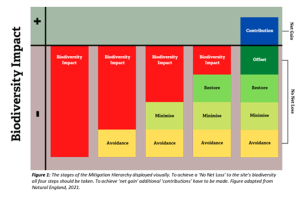
Table 1. – Biodiversity Impact (Natural England, 2021)
Consultation on the Principles of Marine Net Gain (2022)
In 2018, DEFRA sought feedback on making biodiversity net gain a requirement for new developments on land. Respondents suggested that the principles of net gain should also apply to marine developments. This was acknowledged in the government’s response in 2019 but noted that further work was needed to create a suitable approach to net gain for the marine environment.
Building on this, DEFRA launched a consultation in June 2022 which outlined its goals and proposed core principles for implementing a net gain policy for marine environments and associated developments.
According to DEFRA, the proposed MNG regime will primarily aim to promote biodiversity through restoration and protection of marine and coastal habitats and species while “facilitating sustainable growth of marine industries”.
The consultation further set out 9 principles that would underlie the MNG regime, which are intended to inform the subsequent assessment framework. We highlight the most important ones below:
- MNG will measure developments impact on both habitats and species, and incentivise “strategic interventions” instead of site-based. This is due to, as the proposal recognises, the dynamic nature of marine environments. Developments that impact a habitat on site can affect species that traverse through various locations.
- While MNG will primarily focus on biodiversity, it will incorporate wider considerations about natural assets, such as soil health or water quality, into its structure which potentially means that interventions that address other environmental issues will be prioritised.
- MNG requirements will be proportionate and appropriate to the scale and type of development, and MNG will be a mandatory requirement with limited exemptions with the aim that it will cover “nearly all new marine development in English waters”.
Consultation responses
The consultation ran for 14 weeks and DEFRA received 92 responses, 32 of them being from the marine industry. It primarily aimed to gather stakeholders’ opinions on whether marine developments should be required to deliver net gain, and if so, what the scope should be and how MNG could be implemented. The responses were largely supportive of the original proposal, with 81% of the consultees agreeing that MNG should be mandatory. Technical concerns were raised on how monitoring would look and whether net gain should be measured by contributions or a metric developed by DEFRA and NE.
Government’s response
In its response, the government confirmed its position on the most salient issues in the proposal. As such it confirmed that MNG will include both habitats and species recognising the dynamic nature of marine environments, acknowledge the wider environmental benefits as outlined above and explore a selection of options for contributions-based approach while considering the introduction of biodiversity metrics.
However, they confirmed that fisheries will be excluded from the scope of MNG requirements. This, as they argue, is because there is already an existing legal framework to manage UK fisheries, including the Fisheries Act 2020 and the Joint Fisheries statement. These contain legal obligations addressing environmental effects of fish and aquaculture activities on the marine environment.
Next steps
The government recognised the strong support for MNG and confirmed that it will continue to develop the details of the policy. They also outlined the key next steps which include: the creation of an assessment framework for Marine Net Gain delivery, implementation of proof-of-concept projects, development of detailed supporting policy, a full cost-benefit-analysis, and determination of legislative powers. Additionally, they agreed to hold another round consultation prior to any implementation once the policy has been developed.
Discussion
Since the publication of the government’s response on the 9 December 2023, there has been no official communication about the progress made on developing the MNG proposal. More than a year later, we still do not know what the MNG regime will look like in practice, how it might interact with its terrestrial counterpart especially in cases where the development has a land-based element such as convertor stations, or what its relationship will be with the Habitats Regulations 2017 and the Marine and Coastal Access Act 2009.
The proposal also prompted professionals to assess the feasibility of the MNG proposal, or to develop their own MNG metric system through case studies. However, as the government’s priorities have shifted so has the attention of the organisations and academics spearheading these studies. For this reason, it would be useful for the government to release an update on the policy. This will help to maintain the momentum for further developing the MNG framework.
Bibliography
Natural England and DEFRA, ‘Marine Habitats and Species Open Data (England) BNG’ (2021) available at: <https://naturalenglanddefra.opendata.arcgis.com/maps/25867d305dc545509e4d87420e296e12/about.>
Department for Environment, Food and Rural Affairs, ‘Consultation of the Consultation on the Principles of Marine Net Gain’ (June 2022), available at:<https://consult.defra.gov.uk/defra-net-gain-consultation-team/consultation-on-the-principles-of-marine-net-
gain/#:~:text=Broadly%20speaking%2C%20marine%20net%20gain,of%20infrastructure%20planning%20and%20delivery>
DEFRA, ‘Responses to Consultation’ (2023) available at: <https://www.gov.uk/government/consultations/consultation-on-the-principles-of-marine-net-gain/outcome/summary-of-responses#introduction-and-context>
HM Government, ‘Government’s Response’ (2023) available at: <https://www.gov.uk/government/consultations/consultation-on-the-principles-of-marine-net-gain/outcome/government-response#part-5-marine-net-gain-and-additionality-in-marine-protected-areas>
