


Greyhounds, the Senedd, and the Limits of Judicial Review: R (Greyhound Board of Great Britain Ltd) v Welsh Ministers [2026] EWHC 670 (Admin)

What happens when a controversial sport’s governing body tries to use the courts to prevent a legislature from banning that sport before the legislature has even finished debating it? As it turns out, it loses. And loses on grounds that say something important for both animal welfare advocates and for those interested in the UK’s constitutional settlement.
The Divisional Court’s judgment in R (Greyhound Board of Great Britain Ltd) v Welsh Ministers [2026] EWHC 670 (Admin) clears the path for Wales to become the first UK nation to prohibit greyhound racing. In doing so, it drew a firm constitutional line around the Senedd’s legislative autonomy. For those working in animal welfare and public law generally, this case deserves close attention.
Factual Background

In February 2025, the Deputy First Minister of Wales made a statement to the Senedd announcing that “now is the right time to move to ban greyhound racing in Wales.” There was no public consultation before this announcement. The Greyhound Board of Great Britain (“the GBGB”), the regulatory body for the sport, argued that the Welsh Ministers had previously made statements indicating they would consult stakeholders before making any changes to policy on greyhound racing. On the strength of those earlier assurances, the GBGB contended that a legally enforceable legitimate expectation of consultation had arisen. The Welsh Government pressed on regardless.
On 29 September 2025 the Welsh Ministers introduced the Prohibition of Greyhound Racing (Wales) Bill into the Senedd, again without public consultation. The Senedd passed the Bill on 17 March 2026, by 39 votes to 10, three days before the High Court handed down judgment. Once in receipt of Royal Assent, the legislation will make it an offence to organise greyhound racing or operate a stadium used for that purpose in Wales, with the ban expected to come fully into force between April 2027 and April 2030.
Grounds of Claim
The GBGB sought declarations that the Welsh Ministers had acted unlawfully in two respects: first, in the Deputy First Minister’s statement of 18 February 2025; and second, in the subsequent decision to introduce the Bill into the Senedd. The sole ground of challenge was that both actions were unlawful because Welsh Ministers had failed to carry out a public consultation before deciding to ban greyhound racing. This, it was argued, breached the GBGB’s legitimate expectation arising from prior ministerial statements that stakeholders would be engaged before any policy change.
The GBGB also ran an argument, based on the Supreme Court’s decision in AXA General Insurance v HM Advocate [2012] 1 AC 868, that while Acts of the Senedd could not be reviewed on grounds of irrationality, a Bill or ministerial decision to introduce one might be challengeable on procedural grounds such as a failure to consult. The GBGB had originally asked the court to quash the decision to introduce a ban on greyhound racing in Wales. However, during the hearing, the GBGB abandoned its claim for quashing orders and instead sought declaratory relief, including — somewhat ambitiously — declarations that the Welsh Ministers would be expected to seek the Senedd’s permission to withdraw the Bill.
The Judges’ Reasoning
The court dismissed the claim in full. On the core question of consultation, the court was clear: the Welsh Ministers had no legal obligation to consult the public, or any section of it, before introducing the Bill into the Senedd. The argument that a legitimate expectation of consultation could be enforceable against the decision to introduce primary legislation was misconceived. The legislative process itself — i.e., scrutiny in committee, debate on the floor of the Senedd, opportunities for evidence to be called and views to be expressed — was found to fulfil the function of gathering views and evidence. It would, therefore, be constitutionally inappropriate for the courts to impose a pre-legislative consultation obligation on top of that.
In addition, the court drew on the Government of Wales Act 2006 and the AXA precedent to conclude that, in areas falling within its legislative competence, the Senedd holds plenary legislative powers. The Senedd is, in general, the sole arbiter of the procedure to be adopted in enacting legislation, not the courts. The court went further than the AXA analysis in explicitly recognising “the historical and contemporary political fact that Wales is a distinct polity within the United Kingdom” as part of the basis for the Senedd’s legitimacy.
Significance for Animal Rights
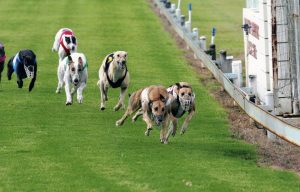
For animal welfare law, this decision matters a great deal. Wales has now enacted legislation that will prohibit greyhound racing, a sport that, according to the Welsh Government’s own assessment, has produced consistent records of injury and fatality to dogs despite industry efforts at reform. The judgment means that judicial review cannot be weaponised by commercial interests to delay or obstruct animal welfare legislation simply by alleging a procedural failure at the pre-legislative stage. The court effectively said: the right forum for those arguments is the Senedd chamber, not the courts.
As legislatures become more willing to act on animal welfare concerns — Wales on greyhound racing, Scotland passing comparable legislation for its own last track within twenty-four hours of the Welsh vote — the litigation risk to those measures is real. This judgment narrows the window through which challenges of this kind can be brought. It is a green light for devolved governments to legislate boldly on animal welfare without fear that industry bodies can stall the process in court.
The case is a restatement of devolved legislatives’ sovereignty within their legislative competence. The Court’s recognition of Wales as a “distinct polity” goes slightly further than the Supreme Court had gone in AXA, and commentators have noted that it represents the courts taking a holistic, rather than merely textual, view of devolution when insulating devolved legislatures from procedural challenge.
For practitioners advising clients with interests in animal welfare reform, this case is a useful precedent. Wales has led the way, and the courts have confirmed that they will be slow to interfere by way of direct challenge to legislative bodies. If you are advising on animal welfare legislation or regulatory challenges to welfare standards our environmental law team would be pleased to assist.
