


First river in England to gain rights
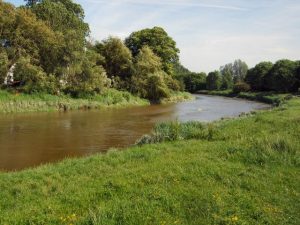
The River Ouse in Sussex is the first river in England to be granted rights, joining a small but growing number of rivers around the world to be recognised as living entities with their own intrinsic right to exist. On 24 February 2025, Lewes District Council approved the Rights for the River Ouse Charter. Whilst not legally binding, the Charter provides a visionary framework for a renewed relationship between people and nature, in which the River Ouse’s fundamental rights are recognised along
side our duty of care and responsibility to uphold these rights.
The Charter is based on the Universal Declaration of River Rights, which was first developed in 2017 by the Earth Law Centre. Located in the United States, the Earth Law Centre works to advance Earth-centred laws and community-led movements throughout the world that respect and protect nature.
The Rights for the River Ouse Charter recognises the following eight fundamental rights:
- The right to exist in its natural state
- The right to flow
- The right to perform essential natural functions within the river catchment
- The right to feed and be fed from sustainable aquifers
- The right to be free from pollution
- The right to native biodiversity
- The right to regeneration and restoration
 The right to an active and influential voice
The rights enshrined in the Charter are intended not only to ensure the health of the River Ouse, but also the health of the river catchment and the bioregion of which the river is a part. Running 35 miles through both West and East Sussex, the River Ouse passes through Lewes before reaching the sea at Newhaven. Along the way, it is fed by numerous smaller tributaries which, like the River Ouse itself, have their source in the chalk aquifers of the South Downs. The river ecosystem sustains a diverse range of life, including legally protected endangered and vulnerable species such as bitterns, otters and Daubenton’s bats.
However, climate change, overconsumption, development and pollution all pose a significant threat, increasing the river ecosystem’s vulnerability to further degradation. According to the water pollution tracker, Top of the Poops, which was established to monitor reported pollution events carried out on waterways in the UK, the River Ouse was polluted 508 times in 2023, totalling 5,200 hours of sewage exposure across eight Southern Water sites. Moreover, the entire south-east region is classified as being under “serious water stress”. The Charter underscores that “we must work together, faster, at a landscape scale, in delivering action to address these threats”.
Spearheaded by the Love Our Ouse community group, the Charter was developed in consultation with local authority officers and councillors, recreation groups, academics, landowners, utility companies, lawyers, and engaged citizens. Love Our Ouse is part of a broader network called the River Rights Network, which is comprised of grassroots organisations campaigning for the protection of local rivers and the recognition of river rights in the UK. The Charter follows on from successful models implemented across the world.
The concept of the rights of rivers is not new. It has grown from an idea acknowledged and revered in many cultures around the world, known broadly as the rights of nature. Rights of nature is a framework for rethinking our relationship with the natural world, which emphasises the importance of shifting away from an understanding of nature based on the value that it provides to humans. Instead, advocates argue that the intrinsic value of nature should be recognised, and that nature should be granted the same kind of legal rights that human rights give to people. In recent years, the intrinsic rights of nature have been increasingly recognised by courts and lawmakers around the world. However, this recognition has been implemented in a variety of ways and from a diverse range of cultural perspectives.
In 2008, Ecuador enshrined the rights of nature, or Pachamama, in its constitution – the first national constitution to officially recognise such rights. In 2010, Bolivia introduced the Law of the Rights of Mother Earth and, in 2012, the Framework Law on Mother Earth and Integral Development for Living Well, which acknowledged principles of harmony, collective good, and the respect and defence of nature.
New Zealand was the first country to recognise the rights of a specific river when in 2017 it granted the Whanganui River legal personhood through the Te Awa Tupua (Whanganui River Claims Settlement) Act, settling one of the longest-running disputes in New Zealand’s colonial relations history. A key acknowledgement of this legislation was the guardian relationship between Whanganui iwi (Whanganui tribes) and the river itself, as well as the establishment of Te Pou Tupua as the legal entity to act and speak on behalf of the Whanganui River. Te Pou Tupua is comprised of one representative from Whanganui iwi and a representative of the Crown, in acknowledgment of the responsibilities of the Crown towards Whanganui iwi and the river. Since 2017, courts have also recognised the rights of individual rivers in countries such as India, Ecuador and Colombia.
Lewis District Council’s endorsement of the Charter marks a significant step in the integration of the rights of nature framework into the UK legal landscape. The Council is set to implement the Charter in coordination with riparian stakeholders, including community groups, landowners and statutory agencies. However, it remains to be seen how and to what extent the Charter will be taken into account in the Council’s decision-making, including in relation to planning decisions, particularly given its non-binding nature.
